
Business Strategy Consultant vs Management Consultant: What’s the Difference?
Your company’s growth depends on the consultant you select. Understanding the differences between a Business Strategy Consultant and a management consultant is important if you are the owner of a startup or operating an existing company. They are not similar. One helps you plan for growth. The other enables you to fix what’s not working.
A business strategy consultant focuses on where your business is headed. They help define your market and your competitive edge. They also guide you on how to scale effectively. A management consultant looks inside your business. They help define your systems and team, and how to run things more effectively. Although they address different issues, both are beneficial.
This guide breaks it down. You’ll learn what each role does, when to hire one, and how to find affordable business strategy consulting services for startups. Whether you’re comparing management consultant vs strategy consultant models or looking for a small business growth strategy consultant, this article will help you choose what fits and what gets results.
Why This Comparison Matters
Consulting isn’t what it used to be. More firms now blend strategy with operations. Some focus only on digital tools (AI, dashboards, and remote workshops) to guide businesses to make decisions.
Startups and small businesses want help that is focused on growth. They’re looking for affordable business strategy consulting services, not just someone to fix internal problems. For this reason, understanding the difference between strategy and management consulting is helpful. Choose the right one. You’ll save time and money.
Here’s how they compare across industries.
| Industry | Business Strategy Consultant | Management Consultant |
| Startups & SMEs | Focus on growth, scaling, and market entry | Improve internal systems, basic process setup |
| Healthcare | Define service models, patient outreach, and digital strategy | Better workflows, compliance, and training |
| Retail & E-commerce | Guide expansion, brand positioning, and customer experience | Inventory control, logistics, vendor management |
| Manufacturing | Product strategy, market diversification | Lean operations, supply chain efficiency |
| Finance & Banking | New service lines, fintech partnerships, and growth strategy | Manage risks, meet regulations, control costs |
| Education & EdTech | Curriculum innovation, platform strategy, market fit | Admin systems, staff structure, and operational audits |
| Technology & SaaS | Market strategy, pricing, growth | DevOps process, team scaling, performance optimization |
Market Size: How Big is Strategy Consulting?
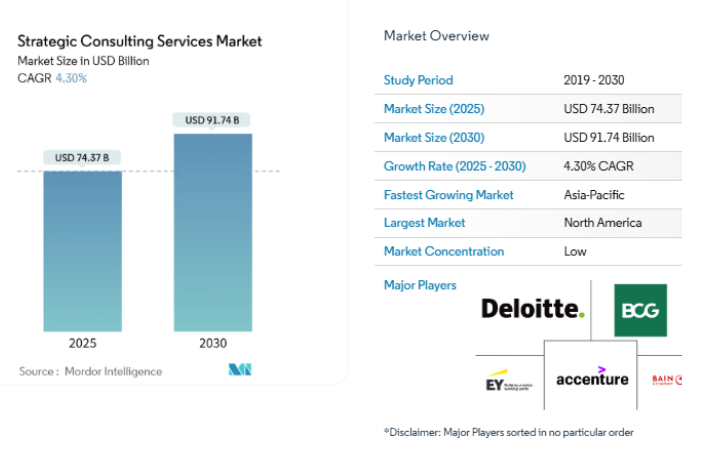
Look at what Mordor Intelligence found. Strategy consulting is a $74.37 billion market in 2025. It’s expected to increase to $91.74 billion by the end of 2030. It is about a 4.3% growth each year.
The takeaway is simple: this is a massive industry. And it’s growing.
What Is a Business Strategy Consultant?
A business strategy consultant helps you plan. Not next week. Not next month. They focus on where your business is headed over the next few years. They look at your competition. They find growth opportunities. They help you enter new markets.
Most work with startups and small businesses. Why? Because those companies need plans built for them. Not generic advice that fits everyone.
Core Functions
Three main things:
- Long-term planning: They help you plan for your business position in three to five years. Business growth strategy consultants help you set clear goals. Then they build a plan to get you there step by step.
- Competitive positioning: They analyze your market. They look at what competitors do. Then they help you stand out. They find what makes you different and worth choosing.
- Market entry: Want to sell in a new city? Launch a new product? Enter a different industry? They map it out. What works. What does not, and what to avoid.

Who Should Hire a Growth Strategy Consultant?
Not everyone does. But these situations call for one:
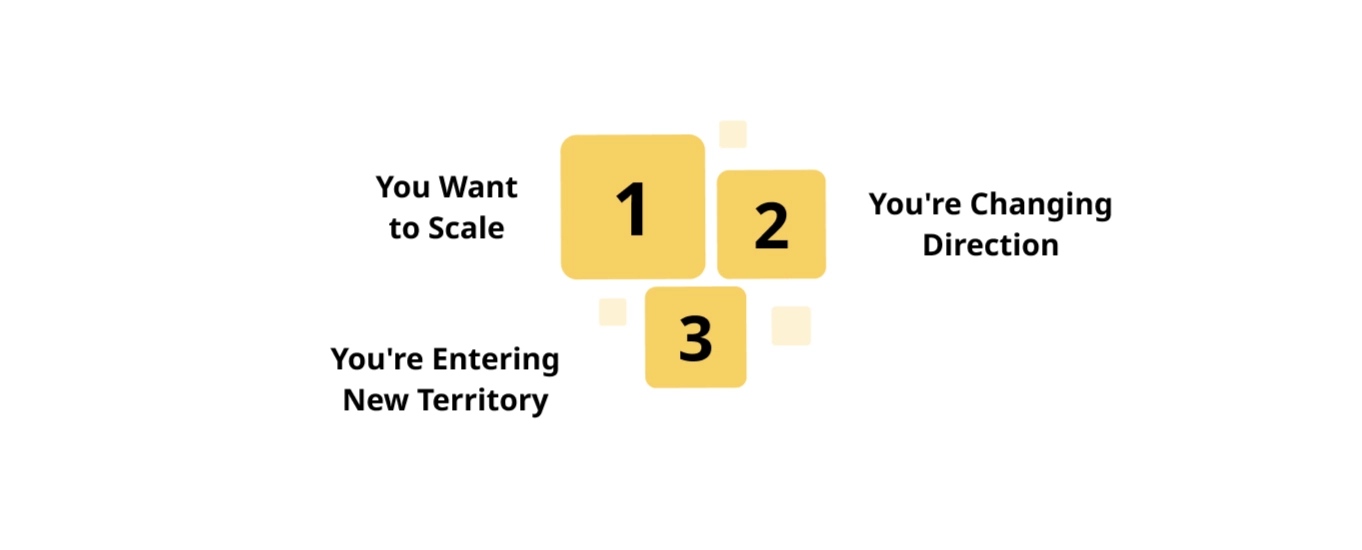
- You want to scale: Your business works. Now you need to grow without breaking it. A small business growth strategy consultant builds that plan.
- You’re changing direction: Your original idea isn’t working. The market shifted. You need to pivot. A consultant helps you figure out the next move.
- You’re entering new territory: New market. New product. New customers. They cut down the guesswork and help you avoid expensive mistakes.
If you’re asking, “How do we grow?”, bring one in.
Tools & Methodologies
They don’t wing it. They use frameworks and tools.
SWOT analysis shows what you’re good at and where you struggle. It also shows your risks and opportunities. PESTLE looks at outside factors like politics, economy, and tech trends. Blue Ocean Strategy helps you find markets no one’s fighting over yet.
Strategy plus data. That’s how they work.
What Is a Management Consultant?
A management consultant is someone businesses bring in to solve internal problems and improve how things work.
Core Functions
Management consultants help companies work better. That might mean:
- Making operations more efficient
- Restructuring teams
- Fixing outdated systems
Large companies hire them during big shifts such as mergers or leadership changes. Their work falls under strategy and management consulting, but they focus more on internal systems than market growth.
Typical Engagements
Management consultants step in when something needs fixing. Common projects include:
- Cutting costs without hurting results
- Helping teams adjust to new tools or leadership
- Making sure the company follows rules and regulations
They don’t just give advice. They work with teams to keep things going.
Business Strategy Consultant vs Management Consultant
Key Differences
| Category | Business Strategy Consultant | Management Consultant |
| Main Focus | Helping the business grow and stand out. | Improving daily operations. |
| Typical Clients | Early-stage and growing businesses. | Large companies with old systems. Mergers and big changes. |
| Key Activities | Market research and business model design. GTM strategy. | Process audits and team restructuring. Cost control. |
| Tools & Methods | SWOT and business model canvas. Analysis tools. | Lean and Six Sigma methods. Change management frameworks. |
| Engagement Goals | Enter new markets and launch products. Scale with stability. | Work better, waste less. Stick to the rules and keep moving. |
| Time Horizon | Planning 1 to 5 years ahead. | Planning for the year ahead. |
| Style of Work | Strategic planning. External-facing | Operational execution. Internal-facing |
Overlap & Collaboration
When both roles work together
Some problems are too big for one kind of help. Digital transformation is a good example. It’s not just about picking new tools; it’s about changing how the business runs.
That’s when strategy and management consultants work side by side.
- Strategy consultants set the direction. They help you decide what to build. Where to grow and how to compete.
- Management consultants handle the details. They fix broken systems and train teams. They improve how things run day to day.
Together, they guide the business through change. One focuses on the future. The other makes sure it works today. As companies grow, they need both. Strategy to plan. Management to deliver. Or upgrading the technology behind the scenes.
Understanding the management consultant vs. the strategy consultant helps you know who to call and when both are needed.
Choosing the Right Consultant for Your Business
Questions to Ask
Don’t just go with the first consultant you find on Google. Hiring a growth strategy consultant who understands your business and goals. Don’t just look at their website. Ask questions. You’ll know from their answers.
- What industries do you know? It matters.
- What growth strategies have you implemented? Show me proof.
- How do you measure success? Good consultants have clear answers.
- Do you work with early-stage or scaling businesses? Some consultants prefer startups. Others work better with growing companies.
- How do you plan and fix things now? Good consultants do both.
- What is included in your fee?
- How do you structure payment?
- What happens if we need more support later?
Their answers show you three things:
- How do they approach problems?
- Their experience.
- Whether they fit.
ROI: Strategic vs Operational Consulting
Strategy consulting usually gives you better long-term returns than operational consulting.
Here’s why.
Operational consultants fix internal problems. They make processes smoother. They cut costs. Those changes help, but the impact is limited. Strategy consultants think bigger. They help you enter new markets. Reposition products. Find growth opportunities. That kind of work compounds over time.
The McKinsey report found something interesting. Companies do better than their competitors when strategy and execution work together. Better revenue. Better profit. Gartner found that strategy, especially digital and innovation work, pays off in 12 to 24 months. Operational fixes work faster but don’t deliver as much.
So which one’s better depends on your needs. Quick improvements or long-term growth.

How to Find Affordable Business Strategy Consulting Services for Startups
Most startups can’t afford big consulting firms. It is not realistic for you when you’re bootstrapping or just raised your seed round.
But you still need strategy help. Good news, an affordable option exists.
Why Field Group Company Is the Right Fit
Field Group Company gets it. We know startups don’t have unlimited budgets or time for theoretical frameworks. We build strategies you can actually use. Not 100-slide decks that sit in your drive. Real plans that help you grow.
What Makes Them Different
We work with growing businesses. That means we understand your challenges. Limited resources. Fast decisions. Constant pivots. Our pricing makes sense for startups. You don’t pay corporate rates. You get strategic help without burning through your runway. We focus on execution. Strategy means nothing if you can’t act on it. We help you plan it and make it work.
What You Get
Clear strategy. No jargon. No fluff. Just what you need to move forward. We take small steps. Clear actions. We know strategy isn’t a one-time thing. So we stay with you as things change.
Want to see if we are right for your business? Check out our strategic consulting services: Field Group Company – Strategic Consulting
What to Expect
Pricing That Works for Your Budget
Most strategy consultants offer flexible pricing. You’re not locked into one model. Some charge hourly. Good if you need occasional advice or short calls. Others work project-based. You pay a flat fee for specific work, like a market plan or competitor analysis.
Retainer models work if you need ongoing support. Monthly fee. Regular check-ins. Strategic guidance as things come up. Many use milestone-based pricing. You pay as they hit goals. Launch strategy complete? Payment. Market entry plan done? Payment. This spreads out costs and ties payment to results.
How Engagements Work
Business strategy consultants work in different ways.
- Workshops. Intensive sessions where you work together. It could be a day. It could be a week. You leave with a clear plan.
- Audits. They review what you’re doing now. Your strategy. Your positioning. Your growth plan. Then they tell you what to fix.
- Retainers. Ongoing relationship. Weekly or monthly calls. Access when you need it. Good for startups that need consistent strategic input.
- Project-based work. Defined scope. Clear timeline. They create something concrete. Pricing strategy. Expansion plan.
Final Takeaway
A Business Strategy Consultant helps you choose the right direction. Management consultants help you move into it.
- Strategy is about where to grow: new markets, new products, and long-term goals.
- Management is about how to run systems, teams, costs, and daily operations.
They solve different problems. But both matter. If things aren’t working, you may need operational help. If you’re growing or want to, you likely need strategic support.
Before you hire a growth strategy consultant, pause and ask:
- Are we fixing what’s broken?
- Or are we trying to grow, shift, or expand?
That answer will shape who you bring in and what kind of results you expect.
Source: https://fieldgroupny.com/business-strategy-consultant-vs-management-consultant/